
When the Signal Goes Dark: Is America Ready to Lose the Internet?
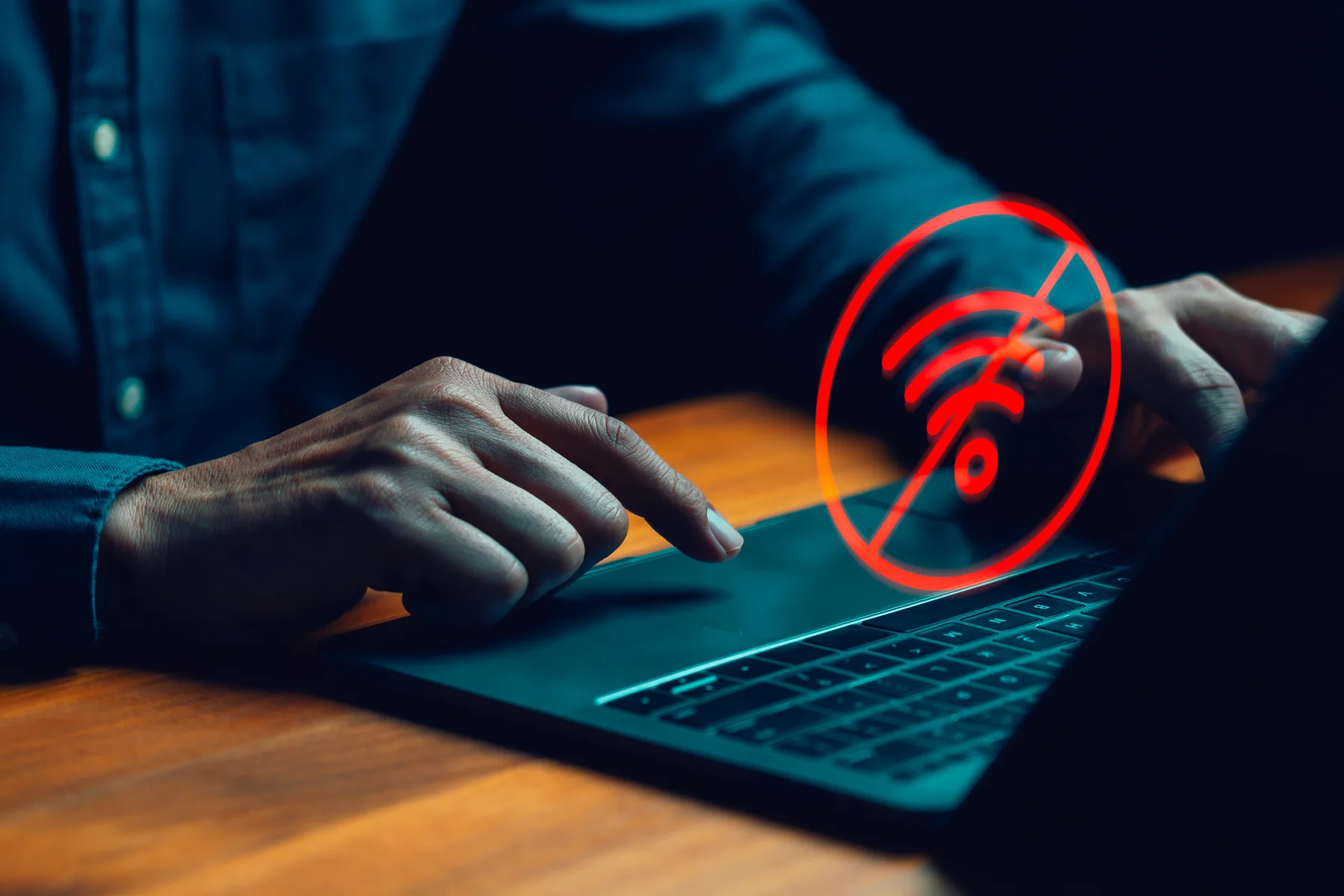
Ask most Americans how to purify water, treat a deep cut, or read a topographic map, and the honest answer is "I'd look it up." That reflex works right up until the connection disappears.
Over the past two decades, the internet has quietly become our shared memory, holding the manuals, medical references, maps, and how-to knowledge that previous generations kept on bookshelves and in their heads. Very few households have a plan for what happens when that memory goes offline.
How Prepared Are We, Really?
Preparedness is improving, but confidence lags behind. In FEMA's 2023 National Household Survey, 51% of Americans said they believe they are prepared for a disaster [2]. By the 2024 survey, 83% reported taking at least three preparedness actions, up from 57% the year before, yet only 32% felt confident in both their ability to prepare and that preparing would make a real difference [3].
There is a deeper problem hiding in that data. When asked where they get preparedness information, respondents named the internet (45%), social media (36%), and TV (35%) as their top sources [3]. The knowledge Americans rely on to get through an emergency lives largely on the same networks that fail during one. Stockpiled water and canned food cover physical needs, but almost no one stockpiles information.
What Happens When the Connection Drops?
This scenario is well documented. Two days after Hurricane Helene made landfall in 2024, 74.3% of cell sites in the western North Carolina disaster area were out of service [4]. In Avery, Mitchell, and Yancey counties, 10% or fewer of cell sites were fully working [5]. Residents lost more than phone calls: relief groups could not coordinate, daily tasks became difficult, and families could not learn whether loved ones had survived [6].
Outages do not require a hurricane. In October 2025, a single technical fault at Amazon Web Services rippled across the country. Downdetector logged more than 11 million outage reports worldwide, over 3 million of them from the U.S., and roughly 2,500 companies saw disruptions at the peak [7]. Airline check-ins, banking apps, and payment systems stopped working. That event lasted hours. A regional grid failure, cyberattack, or severe storm can last days or weeks.
During an extended outage, the questions people normally search for become urgent. How do I treat this burn? Is this plant safe? Which roads lead out of the valley? How do I keep my kids learning while schools are closed? Without offline access, families are left guessing at the moment when good information matters most.
Why Preparation Matters
Preparedness has always meant keeping essentials on hand before you need them: water, food, first aid, a flashlight. Knowledge belongs on that list. A family with offline access to medical references, repair guides, maps, and educational material can make better decisions, help neighbors, and stay calmer when the usual answers are unreachable.
The benefit extends beyond disasters. Rural homes with unreliable service, off-grid cabins, RV travelers, homeschooling families, and small businesses all gain from knowledge that works without a signal.
How LowFi Installers Fills the Gap
LowFi Installers [1] builds ready-to-use offline knowledge systems powered by Project N.O.M.A.D. Each system boots to a simple Command Center that puts everything a household needs one click away:
- Information Library (Kiwix): offline reference content such as Wikipedia, medical guides, and practical how-to material, searchable with no internet connection.
- Education Platform (Kolibri): lessons so children and adults can keep learning when schools or online classes are unavailable.
- AI Assistant (Ollama): a private, local AI that answers questions on the device itself and can search your own documents.
- Offline Maps: navigation when GPS apps cannot load map data.
- Notes: a place to record plans, contacts, and inventories.
Setting this up from scratch takes real technical skill: sourcing content, configuring servers, tuning AI models, and testing everything. LowFi Installers handles all of it. Every unit arrives fully configured and ready to go, so non-technical buyers get a working system out of the box. Customers can also send their own PDFs, such as family medical records, equipment manuals, or property documents, to be loaded for the AI to search.
Giving Old Computers a Second Life
Every NOMAD system also helps address a growing environmental problem. The world generated a record 62 million tonnes of e-waste in 2022, and only 22.3% of it was documented as properly collected and recycled [8]. The pressure keeps rising. When Microsoft ended free Windows 10 support in October 2025, advocacy groups estimated that up to 400 million computers could not meet Windows 11's hardware requirements [9]. Many of those machines still run perfectly well.
LowFi Installers builds on rugged, refurbished Dell laptops. An offline knowledge server needs dependable hardware and careful setup, and it runs well on business-grade machines that no longer qualify for the newest operating system. Giving these laptops a new purpose keeps working devices out of the landfill, avoids the environmental cost of manufacturing new ones, and lowers the price for the customer. Standard refurbished devices include 30-day returns, and new and certified refurbished devices carry a one-year warranty.
Be Ready Before the Signal Fades
The internet is one of the most useful tools ever created, but it was never designed to be your only copy of critical knowledge. A NOMAD system from LowFi Installers puts that knowledge in your hands, on your shelf, and under your control, ready whenever the connection isn't. Systems start at $499.
REFERENCES
- LowFi Installers, Project NOMAD offline knowledge systems. lowfi-install.com
- Risk and Resilience Hub, "Are Americans Prepared for Disasters? FEMA's Survey Reveals Key Findings" (summary of FEMA's 2023 National Household Survey). riskandresiliencehub.com
- "A Look at FEMA's 2024 National Household Survey," May 2025. buckhorncliffs.com
- Benton Institute for Broadband & Society, "The Road to Recovery in Western North Carolina," October 2024. benton.org
- NBC News, "Internet and phone outages cut some Hurricane Helene victims off from the world," 2024. nbcnews.com
- Benton Institute for Broadband & Society, "The Troubling Quiet of North Carolina's Cell Service Outages," October 2024. benton.org
- Leanware, "AWS Outage Hits Major Services: What Happened and What Comes Next," October 2025. leanware.co
- UNITAR and ITU, "Global E-waste Monitor 2024," March 2024. unitar.org
- U.S. PIRG, "Why the end of support for Windows 10 is uniquely troubling," September 2025. pirg.org